

In these project based learning lesson plans, students will explore the concept of designing their dream school. Through this interdisciplinary approach, students will develop critical thinking, problem-solving, and collaboration skills while incorporating various subjects and technologies. Students will form teams and work collaboratively to create a detailed blueprint, write persuasive essays, construct models, and present their dream school to classmates.


Title: Designing Our Dream School – A Project-Based Learning Lesson Plan
Grade level: 4-6
Subject: Social Studies, Language Arts, Arts & Crafts, Technology
Duration: 6-8 weeks
Project Based Learning Lesson Plans
Learning Objectives:
1. Identify and discuss the key components of a school environment that facilitate effective learning.
2. Utilize technology and arts to design and construct a blueprint and model of the dream school.
3. Develop persuasive writing skills to persuade an audience about the benefits of their dream school.
4. Enhance collaboration, communication, problem-solving, and critical thinking skills.
5. Deliver clear and engaging presentations to share their dream school visions.
Materials:
– Art supplies (poster boards, markers, colored pencils, scissors, glue, construction paper, etc.)
– Laptops or tablets with internet access
– Presentation software (e.g., PowerPoint, Google Slides)
– Construction materials (sticks, clay, cardboard, Popsicle sticks, etc.)
– Projector and screen for presentations
– Writing materials (pens, pencils, notebooks)
Procedure:
1. Introduction (1 day):
– Engage students in a discussion about their current school environment. Ask them to think about what they find positive and negative about their school.
– Present the project: students will work together in teams to design their dream school, considering the different components discussed during the discussion.
2. Team Formation and Brainstorming (2 days):
– Divide students into teams of 4-5 members and let them brainstorm ideas for their dream school.
– Instruct each team to consider the following components:
– Classroom design and layout
– Outdoor spaces for activities and recreation
– Library design and resources
– Technology integration
– Creative and art spaces
– Community involvement and support
– Facilities for physical education and sports
– Sustainability and environmental considerations
3. Blueprint and Writing (3-4 days):
– Allocate research time for students to gather ideas and information about their dream school components.
– Each team should design a detailed blueprint of their dream school, incorporating all the components discussed.
– Simultaneously, students should also write persuasive essays or articles explaining why their dream school is an ideal learning environment.
4. Model Construction (4-5 days):
– Provide students with the necessary construction materials to build a scaled model of their dream school.
– Encourage creativity and innovation while constructing their models.
– Supervise and assist students during the construction process.
5. Presentations and Reflection (2 days):
– Allocate time for each team to present their dream school blueprint, model, and persuasive essays to the class.
– Encourage students to highlight the features and benefits of their dream school.
– After each presentation, allow time for questions and peer feedback.
– Facilitate a reflective discussion about the project, emphasizing the importance of collaboration and understanding different perspectives.
Assessment:
– Blueprint and Model: Assess the completeness and creativity of the blueprint and the quality of the constructed model.
– Persuasive Writing: Evaluate the persuasive essays based on the clarity of arguments, supporting evidence, and overall persuasiveness.
– Presentation: Assess the content, delivery, and students’ ability to engage and effectively communicate their dream school vision.
– Collaboration and Teamwork: Observe students’ ability to work effectively within their teams, contribute equally, and resolve conflicts.
Note: Throughout the project, continuous formative assessment should be employed to monitor students’ progress, offer guidance, and provide feedback.
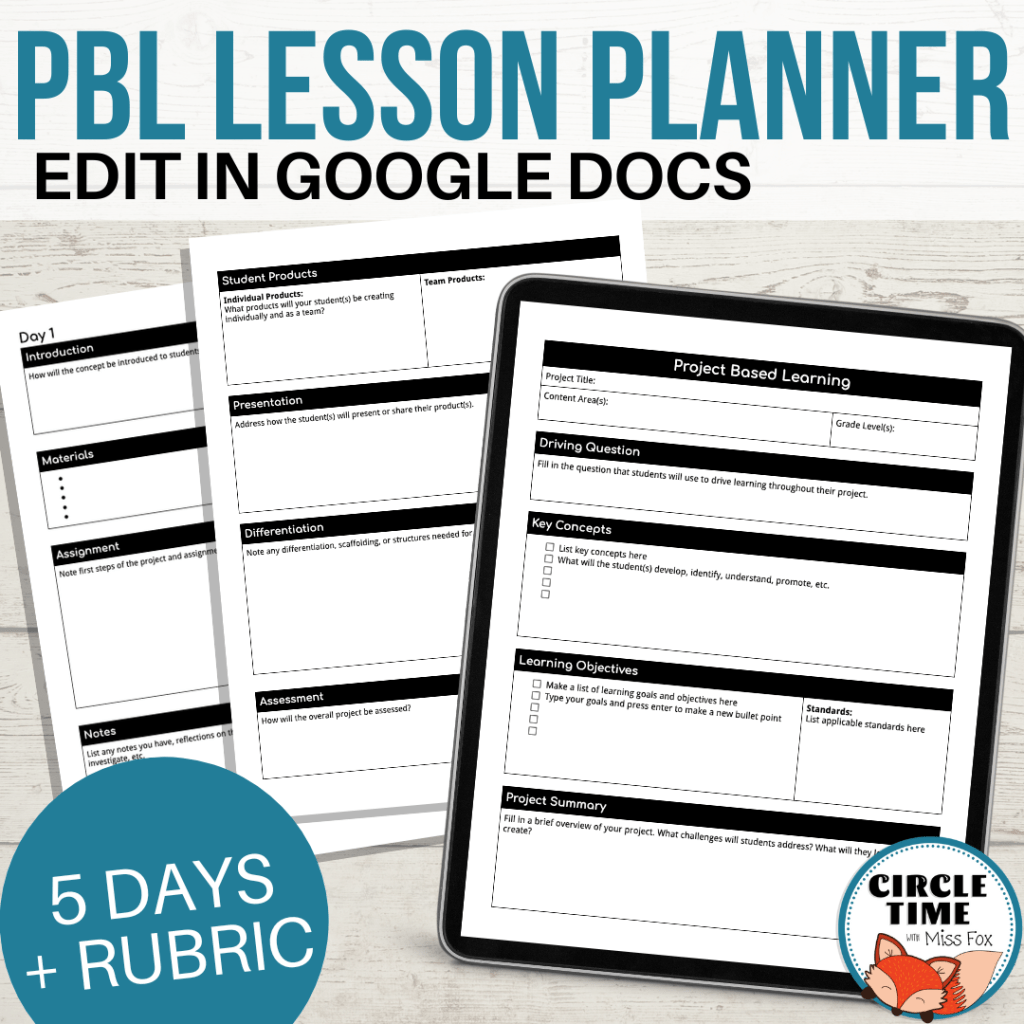
Bonus: Project Based Learning Lesson Plans Template
Whether you’re designing a project based lesson plan for your class, co-op, or homeschool family, make it easy with a simple and effective Project Based Learning lesson plans template. This template includes a two-page overview of your project, five days of planning, and a ten point rubric all in a simple-to-edit Google Doc.

Related:
– Project Based Learning Activities: 50 Engaging Ideas!
– Recycling Project: A PBL Lesson Plan for Grades 5-8
– PBL Project Ideas: 10 Real World Challenges


Ashley helps parents who want to homeschool find the resources they need to successfully teach their children. Ashley is a former teacher, current homeschooler, published author, and designer behind Circle Time with Miss Fox printables as well as the creator of this website, The Homeschool Resource Room.